
Why Visceral Fat Is Considered Stubborn: A Closer Look

Table of Contents
Why Visceral Fat Is Considered Stubborn
Visceral Fat vs. Subcutaneous Fat: What the Difference Means for Fat Loss
Causes of Visceral Fat: Why It Builds and Why It Hangs On
How to Measure Visceral Fat and Track Real Progress
Frequently Asked Questions
Last Updated: October 15, 2026
Why Visceral Fat Is Considered Stubborn
Clients tell me they've cut back, walked more, done everything right, and the belly stays. Across nearly 19,000 clients in 35+ years, the fat isn't lazy. It's protected.
Most people assume all body fat works the same way. It doesn't. The fat under your skin and the fat around your liver, pancreas and intestines respond to different signals and break down at different speeds. That distinction explains more plateaus than any diet mistake I've seen.
Your belly can look the same two months running while the fat underneath changes completely. Weight alone can't tell you which fat you're losing, or whether muscle is going with it.
Visceral Fat vs. Subcutaneous Fat: What the Difference Means for Fat Loss
Subcutaneous fat is the pinchable layer under your skin. Visceral fat sits deeper, wrapped around your organs, and it's metabolically active, releasing hormones and inflammatory signals that affect how your whole body handles energy.
That's why it responds to stress, sleep and blood sugar differently. When cortisol runs high or insulin stays elevated, visceral fat holds on while the pinchable fat responds first. So when someone says they're "losing weight but not fat," this is usually it: the scale drops because muscle and water left, and the visceral fat stayed put.
Watch Out Judging progress by weight alone is the most common mistake I see. A dropping scale can mean lost muscle, not lost visceral fat. That's why I track fat mass, lean muscle, visceral fat and hydration together, never one number by itself.
Causes of Visceral Fat: Why It Builds and Why It Hangs On
Genetics, age and hormonal changes play a role. So do stress, sleep, alcohol and how much muscle you carry. But these factors don't act alone, they stack. A person can have a normal body weight and still carry high visceral fat. Two people, same scale number, completely different biology.
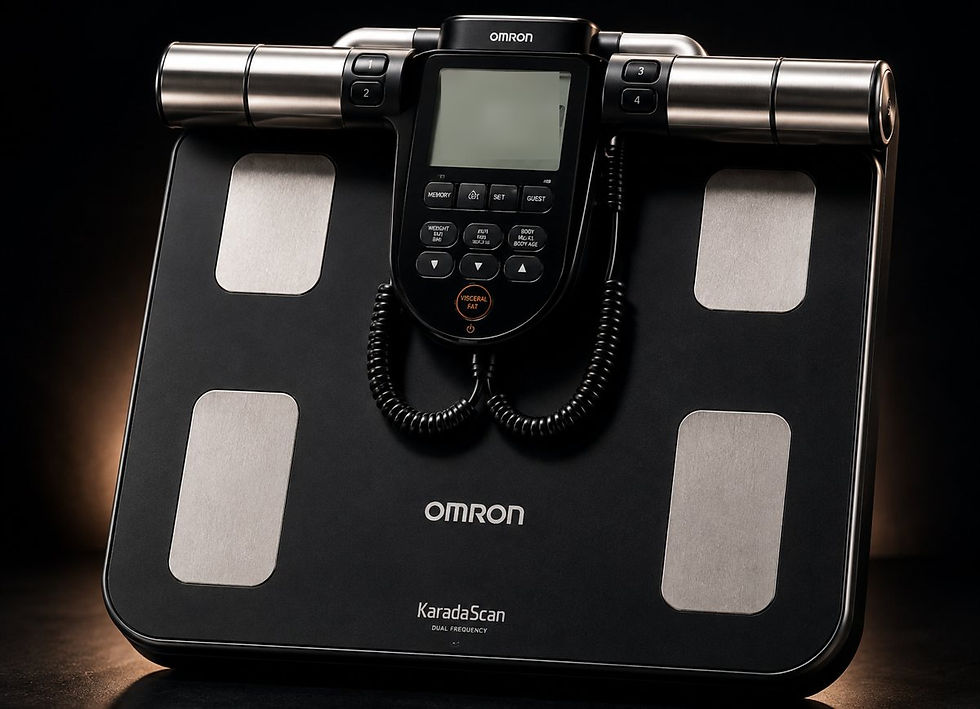
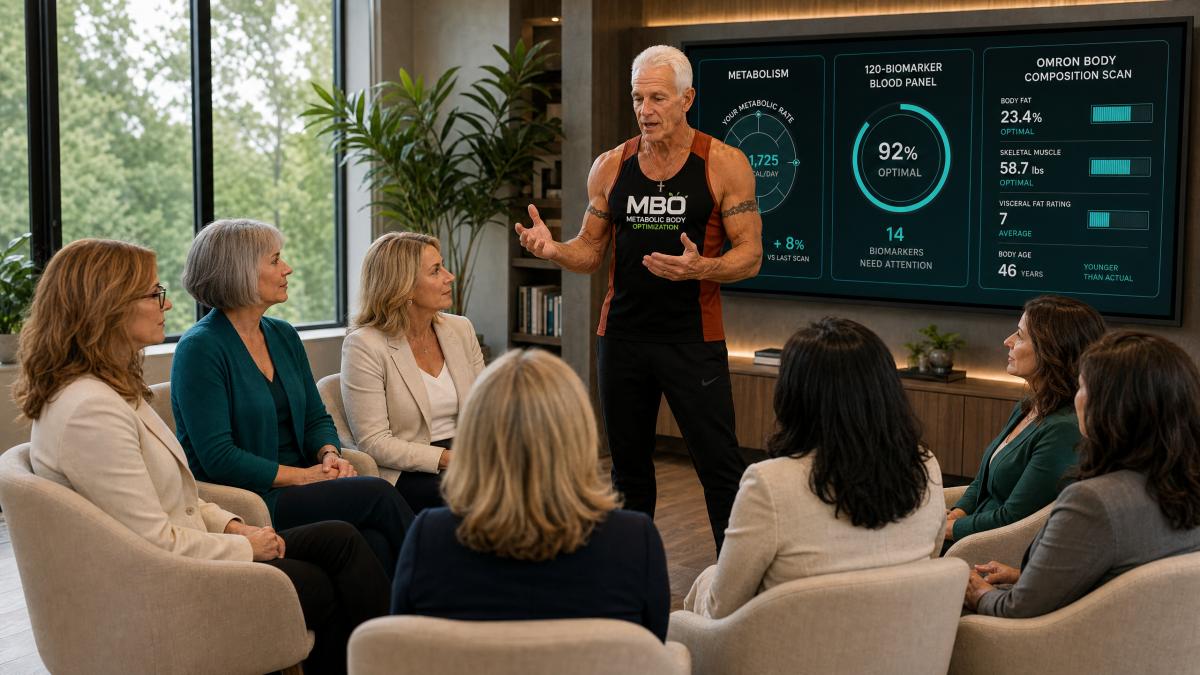
This is where the clues come in. A 120-biomarker blood panel and Omron body-composition analysis shows what's happening with blood sugar, inflammation and hormones, and where the fat actually sits. The Omron gives me the numbers. Blood chemistry gives me the clues. Coaching turns both into a strategy built for that one person.
I've had clients lose 67 pounds and drop from 44% to 22% body fat. Others lost 23.6 pounds of fat while gaining 8.4 pounds of muscle. Same program structure, different bodies, different starting points. The pattern guides the plan, not a template.

Key Takeaway Visceral fat is stubborn because it's biologically different, not because you're doing something wrong. The answer is rarely one isolated number. It's the pattern across your body composition, blood chemistry and history.
How to Measure Visceral Fat and Track Real Progress
You can't see visceral fat in the mirror, and a tape measure only tells part of the story. Body-composition analysis separates fat mass, lean muscle, visceral fat and hydration. That's the difference between guessing and knowing.
When I reassess at 21 days, I'm not checking whether someone "waited long enough." I'm measuring what kind of change actually occurred, fat, muscle, visceral fat, hydration, weight, then I adjust. Some of the most dramatic early change I've seen happens in those first three weeks, because behavior shifts on day one: alcohol to none, sedentary to active, random eating to structured meals, poor hydration to structured hydration.
The 24 weeks exist because lasting metabolic change needs coaching, measurement and adjustment, not because results are slow. Personalization can't be rushed. Results can happen fast. Those are two different ideas, and people confuse them constantly.
If you've been stuck at the same weight for months, the scale isn't lying to you. It's just answering the wrong question.
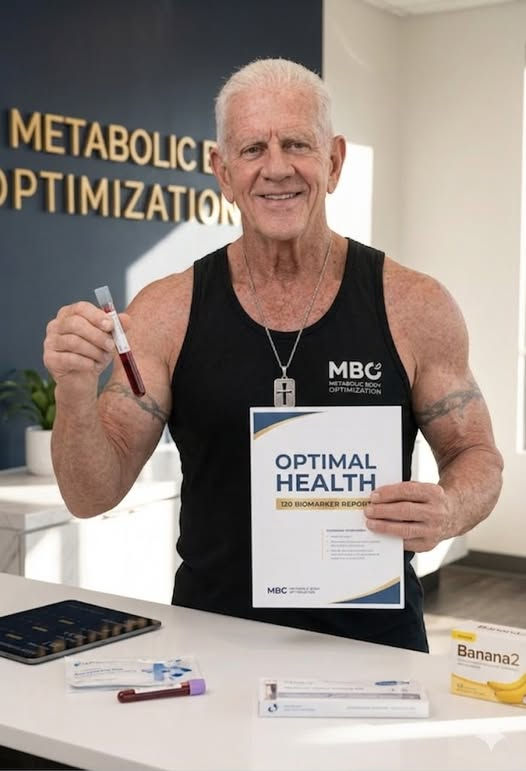
If you've done everything "right" and your belly still won't budge, the problem likely isn't effort. It's that visceral fat, hormones, muscle mass and blood chemistry need to be read together, not one at a time. That's what my 24-week Metabolic Body Optimization program is built for: a 120-biomarker blood panel, an Omron body-composition analysis, and the personalized Glyco-Cycle nutritional system, all adjusted as your body responds. Book your free consultation and find out what's actually happening inside your body.
Frequently Asked Questions
Can visceral fat feel hard?
Visceral fat sits deep inside the abdomen, wrapped around internal organs, so it is not the fat you can pinch. A hard, distended belly can be a sign of visceral fat accumulation, but firmness alone does not confirm it. The only reliable way to know is through body-composition analysis or imaging. At Metabolic Body Optimization, I use an Omron analysis that reports visceral fat alongside fat mass, lean muscle, and hydration, so we are looking at the full pattern rather than guessing from how the belly feels.
Why is visceral fat harder to lose than subcutaneous fat?
Visceral fat is heavily controlled by hormones like cortisol and insulin. When stress, poor sleep or blood-sugar swings are in play, the body protects it. That's why two people on similar diets can see very different results, and why measuring the right variables matters more than cutting calories harder.
How can you tell whether weight loss is coming from fat or muscle?
The scale alone cannot tell you. You need body-composition data that separates fat mass from lean muscle. I have seen clients lose weight quickly on aggressive diets only to discover a significant portion came from muscle. That is why I reassess at 21 days with an Omron scan: it shows fat mass, lean muscle, visceral fat, and hydration, so I can see what kind of change actually occurred and adjust the strategy before muscle loss becomes a pattern.
Request your free consultation at mboclinic.com, book at https://oncehub.com/mbo-clinic, or call or text my assistant Iris at (772) 946-1328.
Comments