
10 Best Biomarkers to Track for Weight Loss

Table of Contents
Why Your Standard Blood Panel Misses the Real Clues
The 10 Best Biomarkers to Track for Weight Loss
Body Composition Tracking for Fat Loss: The Numbers Blood Can't Give You
Frequently Asked Questions
Last Updated: October 13, 2026
Why Your Standard Blood Panel Misses the Real Clues
Your annual physical checked a handful of markers and called it good. That's the problem.
In 35 years and nearly 19,000 clients, I keep seeing the same thing: a "normal" lab report sitting next to a body that won't budge. Normal isn't optimal, and a basic panel misses most of what explains stalled fat loss, low energy, and muscle loss after 40.
When people ask me about the 10 best biomarkers to track for weight loss, I tell them the truth: the list matters less than the pattern. One number in isolation tells you almost nothing.
Your body is leaving clues, and blood is one of the best places to find them. Here's what I look at, and why each marker only means something read alongside the others.
The 10 Best Biomarkers to Track for Weight Loss
Here are the markers I watch closest. Each tells part of the story.

A man in his fifties sitting at a kitchen table reviewing a printed blood test report with a pen in hand, coffee mug nearby, warm morning light through a window
Fasting insulin - how much insulin you make unfed. High levels mean your cells stopped listening, making fat storage easier and fat release harder.
HbA1c - your three-month blood sugar average. Standard panels skip it unless you already look diabetic.
Fasting glucose - one snapshot. It can look fine while insulin quietly climbs.
Triglyceride-to-HDL ratio - a simple division that says a lot about insulin resistance. Most reports list both numbers and never connect them.
hs-CRP - inflammation. When it runs high, fat loss and recovery get harder.
Thyroid panel (TSH, free T3, free T4) - your metabolic throttle. Basic tests check TSH alone.
Vitamin D - low levels show up often in people who are tired and stuck. It affects muscle, mood, and regulation.
Ferritin and iron - low iron means low energy, and low energy means fewer calories burned through daily movement.
Vitamin B12 and magnesium - both shape energy and fuel handling. Neither shows on a routine panel.
Sex hormones (testosterone, estradiol, SHBG) - these shift hard after 40, especially for women, shaping where you store fat and whether you hold muscle.
Here's what most guides skip: reading these one at a time is a mistake. A single out-of-range number often means nothing alone. The pattern across all ten tells me where to start.
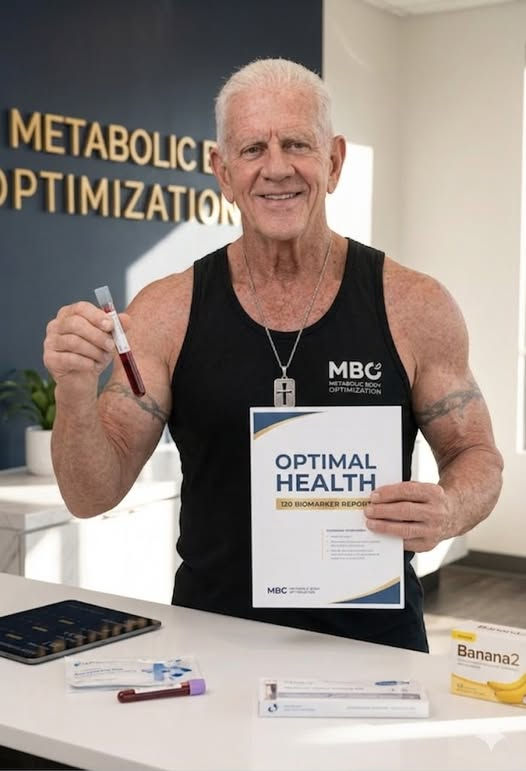
That's why I run a 120-biomarker blood panel and Omron body-composition analysis with every client. More clues means a better read.
This is also how the Glyco-Cycle® gets personalized. It's a repeating 3-day cycle built to manage insulin and glucagon, and it only works matched to your actual results. The same panel shapes your supplement recommendations, based on your numbers rather than a generic plan.
Pro Tip If your doctor says your labs are "normal," ask for the actual numbers. Normal ranges are built to catch disease, not to show you where you're functioning at your best. Those are two different questions.
This works whether you're on a GLP-1 or not. I've coached plenty of people using GLP-1 therapy, and the goal never changes: lose fat, keep muscle.
Body Composition Tracking for Fat Loss: The Numbers Blood Can't Give You
Blood tells you what's happening inside. It can't tell you what your body is made of.
That's where body composition tracking for fat loss comes in. I use an Omron analysis measuring four things: fat mass, lean muscle, visceral fat, and hydration.
Why does that matter? The scale lies. It counts fat, muscle, and water as one number.
Weight loss is not fat loss. Those are different goals, and only one is worth chasing.
In 35 years, I've never met a client with too much muscle.
Watch Out Chasing the scale alone is the most common mistake I see. People cut calories hard, drop weight fast, and lose muscle in the process. Then their metabolism slows, the weight comes back, and they're worse off than when they started.
So I track both. Blood chemistry provides the clues. The Omron provides the numbers. Coaching turns both into a personalized strategy.
We recheck body composition at 21 days. That's not a waiting period. Nutrition, activity, hydration, and behavior change all start on day one.
The full program runs 24 weeks. Not because results are slow, but because lasting metabolic change needs coaching, measurement, and accountability over time.
Key Takeaway The answer is rarely one isolated number. It's the pattern, read together, over time. That's what separates guesswork from a real strategy.
I'm a coach, not a doctor. I review results for coaching and nutrition, not diagnosis. If something needs medical attention, I'll tell you to take it to your physician.
If you've been stuck at the same weight for months, doing all the "right" things, the problem usually isn't effort. It's information.
That's what I built Metabolic Body Optimization to fix: a 120-biomarker blood panel, Omron body-composition tracking, and the personalized Glyco-Cycle® system, guided by 35 years and nearly 19,000 clients.
Book your FREE consultation with Coach Remington: https://oncehub.com/mbo-clinic
Prefer to talk? Call or text Iris at (772) 946-1328.
Frequently Asked Questions
What are the most important blood tests to check for weight loss?
The most useful panel for fat loss goes beyond a basic annual physical. I look at fasting insulin, HbA1c, fasting glucose, triglyceride-to-HDL ratio, hs-CRP, a full thyroid panel including free T3 and free T4, vitamin D, ferritin, sex hormones, and ApoB. Each one tells a different part of the story. A standard panel might check glucose and cholesterol, but it misses fasting insulin, free T3, and hs-CRP, which are often the markers that explain why fat loss has stalled. The pattern across all of them matters more than any single number.
Can blood work show whether I am losing fat or muscle?
Blood work alone cannot tell you that. It shows what is happening metabolically, but not what kind of tissue you are losing. That is why I pair the 120-biomarker blood panel with Omron body-composition analysis. The Omron measures fat mass, lean muscle, visceral fat, and hydration. When you track both together, you can see whether the scale is moving because of fat loss or muscle loss. In 35 years, I have never met a client with too much muscle. Protecting it is the whole point.
Does a GLP-1 medication show up in bloodwork?
GLP-1 medications do not typically appear on standard metabolic or hormone panels. What does show up is the effect they are having on your body: changes in fasting glucose, HbA1c, and sometimes fasting insulin. If you are on a GLP-1, that context matters when I read your results. The medication changes the picture, but it does not replace the need to track what is happening to your muscle, your hydration, and your metabolic markers over time. My program works with or without a GLP-1.
Book Free Consultation


Comments