
Why Is My Metabolism Slowing? The Answer Isn't What You Think !

You may be eating less than you used to, exercising more often, and still watching the scale refuse to move. Worse, your clothes fit differently, your energy drops in the afternoon, and the methods that once worked now leave you hungry and frustrated. When a client asks me, “why is my metabolism slowing,” I do not start by blaming age or telling them to cut more calories. I start by looking for the clues their body is leaving.
After coaching more than 19,000 clients over 35 years, I have learned that metabolism rarely “just stops.” What usually changes is body composition, recovery, food intake, activity, hormones, sleep, stress, or some combination of all of them. The scale cannot tell us which one is driving the problem. That is why guessing leads so many people into another restrictive diet and further away from the result they want.
Why Is My Metabolism Slowing in Midlife?
Your metabolism is not one single number. It is the total energy your body uses to stay alive, digest food, move through the day, recover from exercise, and maintain tissue. Lean muscle is metabolically active tissue, so when muscle declines, your daily energy needs commonly decline with it.
This is one of the biggest patterns I see in adults over 40. A client may weigh close to what they weighed 10 years ago, yet their body composition has changed dramatically. They have less muscle, more body fat, often more visceral fat around the organs, and a lower capacity to tolerate the same nutrition strategy they used in the past. They are not failing. Their old strategy is no longer aligned with their current biology.
A 52-year-old professional may tell me, “I barely eat all day, then I cannot control myself at night.” That is not a character flaw. It may be the predictable result of under-fueling, poor sleep, chronic stress, a demanding work schedule, and muscle loss from years of dieting without a plan to protect lean mass. If we only look at body weight, we miss the entire story.
The Body Composition Clue Most Programs Miss
I use the Omron body composition analysis because pounds alone do not tell me whether a client is losing fat, losing muscle, holding water, or all three. Two people can each lose 15 pounds and have completely different outcomes. One can lose primarily fat while preserving lean muscle. The other can lose a meaningful amount of muscle, which may make their next phase of fat loss harder.
That distinction matters. I am not interested in helping you become a smaller version of a metabolically weaker body. My goal is measured fat loss, protected muscle, and a body that functions better when the program is over.
A low-calorie approach can make the scale move quickly at first. But if the plan is too aggressive, protein is inadequate, resistance training is absent, or recovery is poor, lean muscle can become part of the weight lost. That is the trade-off many people never see until progress stalls months later.
I have coached clients who believed they had “slow metabolism” when the real issue was a decade of cycling between hard restriction and rebound eating. Their bodies had adapted to inconsistent input and repeated muscle loss. The answer was not a harsher diet. It was a structured strategy that rebuilt consistency, supported muscle, and gave us measurable feedback.
Your Daily Habits Can Quietly Reduce Energy Output
Exercise is valuable, but a few hard workouts each week cannot always offset what happens during the other 165 hours. When calories drop too low, fatigue rises, sleep suffers, and people often move less without realizing it. They take fewer steps, sit longer, skip errands, and lose the natural movement that once kept their daily energy expenditure higher.
This is why “eat less and move more” is incomplete coaching. It ignores how the body responds to restriction. I have seen clients add intense cardio, slash calories, and become so depleted that they train harder but live less actively. Their recovery deteriorates, cravings increase, and their body composition does not improve the way they expected.
The solution depends on the person. Someone who has been sedentary may need a gradual increase in daily movement before adding demanding training. Someone already exercising six days a week may need more recovery, better nutrition timing, and a resistance-training plan that prioritizes muscle over exhaustion. Coaching is knowing the difference before making a recommendation.
Biomarkers Explain What the Mirror Cannot
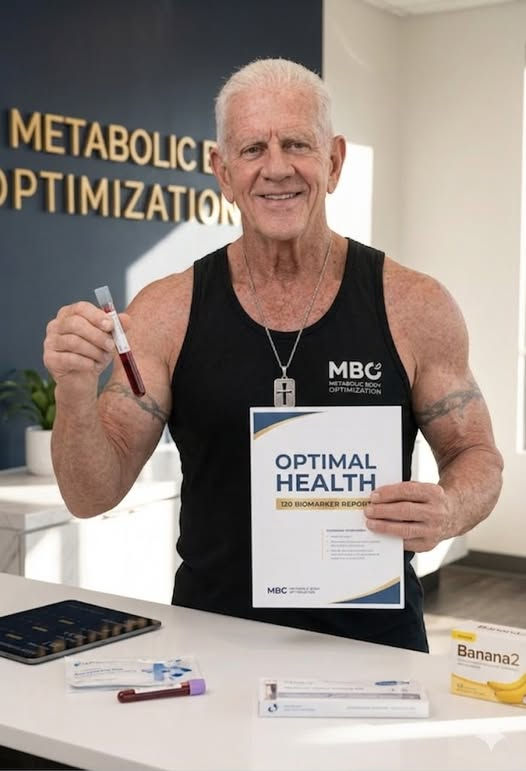
The outside of your body gives us clues. Your internal health gives us context. That is why I use a 120-biomarker blood analysis before I prescribe a strategy. I want to understand the factors that may be affecting energy, appetite, blood sugar regulation, inflammation, thyroid function, nutrient status, liver health, and hormonal patterns.
A client can be doing many things “right” and still struggle because their internal picture is not being addressed. I have worked with people whose stalled progress made much more sense once we saw the biomarkers. Sometimes the next right step is a nutrition adjustment. Sometimes it is a conversation with their physician. Sometimes it is reducing the intensity of a program that is creating more stress than progress.
Bloodwork does not replace coaching, and coaching does not replace medical care. It gives us better evidence. The Omron tells me what is happening to body fat, muscle, hydration, and visceral fat. Biomarkers help explain the environment in which those changes are occurring. Together, they let me stop guessing.
Medication and Supplements Are Tools, Not the System
GLP-1 medications, peptides, hormone optimization, supplements, and exercise can all have a place. I am not against tools. I am against treating a tool as the entire plan.
For example, a GLP-1 may help a client control appetite and create the space for meaningful fat loss. But reduced appetite can also make it easier to under-eat protein and lose muscle if no one is measuring body composition and guiding nutrition. The medication may be helpful, but it does not automatically build the habits, training response, recovery practices, and metabolic flexibility needed for lasting results.
The same is true of supplements. A supplement can support a deficiency or a specific goal, but it cannot rescue a program built on poor sleep, inconsistent eating, no resistance training, and no accountability. I have watched people spend thousands of dollars on advanced interventions while avoiding the fundamentals that would actually protect their progress.
What I Change When Metabolism Has Slowed
I do not hand every client the same meal plan. I build a strategy around what their data and lifestyle reveal. That may include the Glyco-Cycle® nutrition system, a protein target designed to support lean mass, strength training appropriate for their current capacity, daily movement, and a recovery plan that fits real life rather than perfect life.
The first objective is often not rapid weight loss. It is creating a stable foundation where the body can respond. We may need to improve food quality and meal structure, reduce chaotic grazing, build consistency around sleep, or increase protein before we ask for a significant calorie deficit. That can feel slower than a crash diet, but it protects what matters.
Then we measure outcomes. Is body fat decreasing? Is lean muscle holding steady or improving? Is visceral fat changing? Is hydration improving? Are energy, hunger, sleep, and performance becoming more predictable? Those answers guide the next adjustment. Your body is giving feedback all the time. My job is to help you understand it and respond intelligently.
Stop Blaming Yourself and Start Measuring
If your metabolism feels slower, do not assume you need more punishment. You may need a clearer picture. The goal is not to eat as little as possible or exercise until you are exhausted. The goal is to support fat loss without sacrificing muscle, improve the conditions that affect your metabolism, and create results you can maintain.
Every body leaves clues. Schedule a Metabolic Assessment with me, Coach Remington, and we will discover what your body is revealing through body composition and biomarkers, then build a personalized strategy for measured fat loss, protected muscle, and lasting results.


Comments