
How to Get a Personalized Meal Plan for Weight Loss That Protects Your Muscle

Table of Contents
How Do You Get a Personalized Meal Plan for Weight Loss?
What Most People Get Wrong About Personalized Plans
Why Does Body Composition Analysis for Weight Loss Change Everything?
What Can Blood Biomarker Testing for Nutrition Reveal?
How Do I Get a Truly Personalized Plan?
What Role Does Accountability Play in a Weight-Loss Meal Plan?
Key Takeaways
Your Body Leaves Clues. Let's Find Them.
Frequently Asked Questions
Last Updated: October 7, 2026
How Do You Get a Personalized Meal Plan for Weight Loss?
You get a personalized meal plan for weight loss by testing first, then building the plan around what your body actually shows you. No app or template can do that.
I'm Coach Charles Remington. In 35 years and nearly 19,000 clients, I've never seen a downloaded meal plan fix a stubborn metabolism. Weight loss is not fat loss.
At Metabolic Body Optimization, we build every plan from clues your body already gives you. The Omron provides the numbers. Blood chemistry provides the clues. Coaching turns both into a personalized strategy.
Measure body composition, not just weight.
Run a full blood panel, not a basic one.
Review health history, schedule, food preferences, and training.
Fit the nutrition system to those findings, not a template.
Track, re-measure, and adjust with real accountability.
Key Takeaway The answer to "how do I get a personalized meal plan for weight loss" is not a better app. It is better data about your own body, interpreted by someone who has seen thousands of bodies like yours.
What Most People Get Wrong About Personalized Plans
Most people start with food, hunt for the perfect meal list, then wonder why adherence collapses by week three.
Food is not the problem. Fitted properly, food becomes the solution, fitted to your measurements, history, and life. People chase a lower scale number with no idea what it's made of. Fat, muscle, water, visceral fat: the scale lumps them together, and your metabolism pays later.
Why Does Body Composition Analysis for Weight Loss Change Everything?
Body composition analysis for weight loss matters because it separates fat from muscle, and those tell different stories. An Omron scan gives fat mass, lean muscle, visceral fat, and hydration.

A man in his 50s standing on an Omron body composition monitor in a clean clinical office, a coach reviewing results on a tablet nearby
Two people can weigh the same and need opposite strategies. One carries too much visceral fat with decent muscle underneath; the other has lost muscle from years of crash dieting.
What Can Blood Biomarker Testing for Nutrition Reveal?
Blood biomarker testing for nutrition reveals what's happening beneath the surface: glucose handling, inflammation, thyroid and hormones, and key nutrient status. No meal template can guess that.
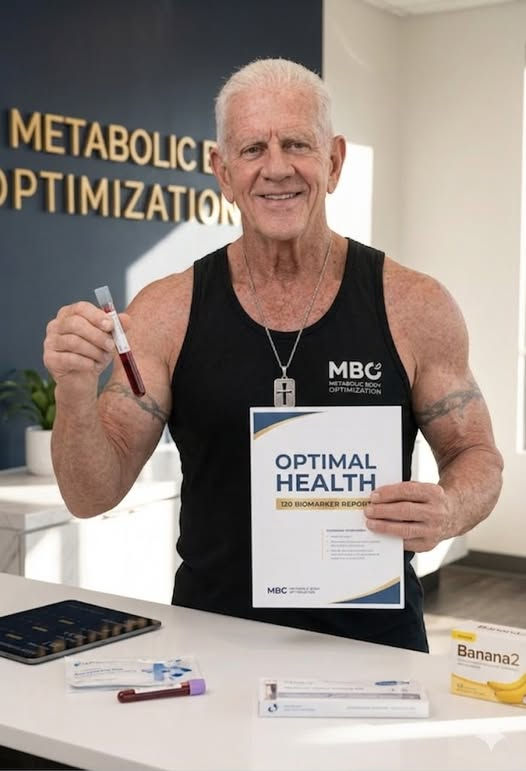
We use a 120-biomarker blood panel. Not a basic physical. The answer is rarely one isolated number. It is the pattern. One marker out of range might mean nothing alone; three moving together tell a story.
Watch Out Building a meal plan around a single lab value, or around a single scale reading, is how people end up eating "perfectly" and still losing muscle. The clues only mean something read together.
How Do I Get a Truly Personalized Plan?
You get a truly personalized plan by combining body composition, blood chemistry, health history, schedule, food preferences, and training into one strategy, then adjusting as your body responds.
This is where the Glyco-Cycle comes in. It alternates fat-burning days with a recovery day that helps you avoid metabolic slowdown and keeps you fueled for training.
The plan starts on day one. Nutrition, activity, hydration, and behavioral change begin immediately, baseline testing sharpens what we do from week one. Personalization cannot be rushed; results can happen quickly. Historically some of the most dramatic early change shows up in the first 21 days.
CDC information on assessing weight and health
What Role Does Accountability Play in a Weight-Loss Meal Plan?
Accountability separates a plan that works for three weeks from one that works for six months. I've never met anyone who failed because they didn't know what to eat, plenty failed because nobody was watching, measuring, and adjusting.
At 21 days, we re-check your body composition on the Omron, fat, muscle, visceral fat, hydration, weight, then I adjust the strategy based on what the numbers show, not what we hoped for.
Pro Tip The 21-day re-check is not a grade. It's a fork in the road. If fat is dropping and muscle is holding, we push. If muscle is slipping, we change the approach before it costs you.
I coach clients in Vero Beach and virtually nationwide, and accountability looks the same either way. Direct coaching. Real measurements. Adjustments when your body answers back.
Key Takeaways
A personalized meal plan for weight loss starts with testing, not food lists.
Body composition separates fat from muscle, and that changes the plan.
A 120-biomarker blood panel shows the pattern, not just one number.
The Glyco-Cycle alternates fat-burning days with a recovery day to protect your metabolism and fuel training.
Accountability and re-measurement keep results from stalling.
Your Body Leaves Clues. Let's Find Them.
If you've tried plan after plan and always lose muscle with the fat, the problem was never your willpower. Nobody measured what was actually happening inside your body.
That's the work I do. We start with your numbers, read the pattern, and build a personalized meal plan for weight loss that protects your muscle while you strip fat.
Book your FREE 30-Minute Metabolic Strategy Consultation. Call (772) 946-1328 or visit metabolicbodyoptimization.com. I'd be honored to help. - Coach Charles Remington
Frequently Asked Questions
How do I get a personalized meal plan for weight loss?
Start with data about your own body, not a template. Body composition analysis shows how much fat, muscle, visceral fat and hydration you carry. Blood biomarker testing reveals how your body handles glucose, inflammation and nutrients. From there, a plan is built around your health history, schedule, food preferences and training. The plan is the starting point; regular measurement and adjustment are what make it work.
Can blood tests help personalize a nutrition plan?
Yes. A 120-biomarker blood panel can show patterns that a generic plan ignores: how your body manages blood sugar, whether inflammation is present, how your liver and kidneys are functioning, and whether key nutrients are low. Those clues change what your plan should look like. Two people the same age and weight can need very different approaches based on what their blood chemistry shows.
How can I lose fat without losing muscle?
The scale alone cannot tell you whether you are losing fat or muscle. Body composition analysis separates those numbers. A plan that preserves muscle typically pairs adequate protein with a structured eating pattern like the Glyco-Cycle system, which alternates fat-burning days with a recovery day to help avoid metabolic slowdown and fuel training. Tracking body composition every few weeks shows whether muscle is holding.
Why do generic meal plans stop working?
Generic plans are built for an average that does not exist. They ignore your metabolic health, your food preferences, your schedule and your training load. When the plan does not fit your life, adherence drops. When it does not fit your biology, your body adapts and progress stalls. A plan fitted to your own data and adjusted over time is what breaks that cycle.
Book Free Consultation


Comments