
Fat Loss After 40: Why the Scale Can Fool You

By Coach Remington
After coaching more than 19,000 clients over the past 35 years, I've learned something that surprises almost every man who walks through my door.
A man can lose 20 pounds and actually become less healthy.
That statement sounds impossible until you understand one simple truth.
The scale has no idea what you lost.
It doesn't know whether you lost body fat.
It doesn't know whether you lost muscle.
It doesn't know whether you lost water.
It doesn't know whether you're carrying dangerous visceral fat around your organs.
It simply reports one number.
Unfortunately, millions of men judge their success by that one number every morning.
At Metabolic Body Optimization, we don't.
We measure what actually matters.
Because if your goal is simply to become lighter, there are hundreds of ways to accomplish that.
If your goal is to become stronger, healthier, leaner, and more metabolically efficient, the strategy changes completely.
Your Body Changes After 40
One of the biggest myths I hear is:
"My metabolism just stopped working."
I don't believe that's what happens.
What I see is something different.
Life changes.
You become busier.
Your career grows.
Stress increases.
Sleep becomes shorter.
Exercise becomes less consistent.
You eat on the run.
Maybe testosterone begins to decline.
Maybe blood sugar begins creeping upward.
Maybe medications are added.
Maybe you're carrying another twenty or thirty pounds around your waist.
None of those things guarantee failure.
But together they create a completely different biological environment than you had at thirty.
Your body isn't broken.
It simply requires a smarter strategy.
Most Men Make the Same Mistake
The first thing they do?
They eat less.
Then they eat even less.
The scale drops quickly...
...and they celebrate.
But here's the question I ask every client.
What exactly did you lose?
Because if you're losing muscle instead of fat, you're actually making future fat loss harder.
Muscle is one of the greatest metabolic assets your body owns.
It helps regulate blood sugar.
It supports strength.
It protects mobility.
It allows you to burn more energy throughout the day.
Lose enough of it, and you've made your body less capable of keeping the fat off.
That's why I have spent decades telling clients:
Weight loss is easy. Healthy fat loss is much more intelligent.
We Don't Guess
One of the biggest differences at MBO is that we don't rely on the bathroom scale.
We use Omron Body Composition Analysis because I want to know exactly what's happening inside your body.
Has body fat decreased?
Did visceral fat improve?
Did muscle stay protected?
How's your hydration?
Those answers tell the real story.
I've watched clients become frustrated because the scale barely moved...
...while their body fat dropped, muscle increased, and their waist shrank several inches.
The opposite happens too.
I've seen people proudly lose fifteen pounds...
...only to discover much of it came from muscle.
Those are two completely different outcomes.
Unfortunately, the scale treats them exactly the same.
Biology Before Calories
People often ask me,
"Coach, what's the best diet?"
I think that's the wrong question.
The better question is:
What's happening inside your biology?
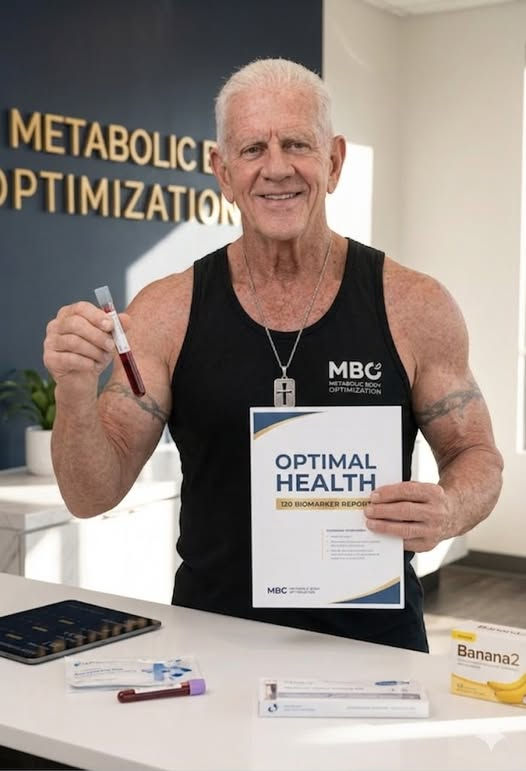
At MBO, we begin with over 120 biomarkers because your blood tells a story your scale never can.
We look for patterns.
Blood sugar.
Inflammation.
Hormones.
Thyroid function.
Nutrient deficiencies.
Cardiovascular risk.
Recovery.
The goal isn't simply collecting numbers.
The goal is understanding why your body behaves the way it does.
Because once you understand your biology...
...your strategy becomes much more precise.
The System Matters More Than The Tool
Today many men are using GLP-1 medications.
Others are considering peptides.
Some are exploring testosterone replacement.
Those can all become valuable tools.
But I tell every client exactly the same thing.
Tools don't create lasting results.
Systems do.
A GLP-1 can reduce appetite.
It cannot make you eat enough protein.
It cannot preserve muscle.
It cannot teach proper meal timing.
It cannot improve your habits.
It cannot coach you through vacations, holidays, stress, or business travel.
Only a complete system can do that.
That's why MBO combines personalized nutrition, body composition tracking, metabolic coaching, blood biomarkers, and ongoing accountability.
Because lasting success has never depended upon one tool.
It depends upon having the right system.
Protect The Muscle You're Going To Need Tomorrow
One thing I wish every man over forty understood...
You are no longer training for summer.
You're training for the next thirty years of your life.
The muscle you preserve today becomes the strength that allows you to play with grandchildren.
Travel.
Remain independent.
Prevent falls.
Recover from illness.
Enjoy retirement.
Muscle isn't about looking younger.
It's about living better.
That is why resistance training becomes so important.
Not because I want you living in a gym.
Because I want your body to have a reason to keep the muscle you're working so hard to build.
My Philosophy Has Never Changed
After more than three decades of coaching, I've never believed people fail because they lack willpower.
Most fail because nobody taught them what to measure.
The scale only measures weight.
At Metabolic Body Optimization...
we measure outcomes.
We measure body fat.
We measure muscle.
We measure visceral fat.
We measure hydration.
We measure blood biomarkers.
We measure health.
Because when you understand the right things...
you stop chasing the wrong ones.
If you're over forty and frustrated because your body no longer responds the way it once did, don't assume you're failing.
It may simply be time to stop measuring weight...
and start measuring what actually determines lifelong health.
Your body has been serving you every day of your life.
Now it's time to build a strategy that serves your body.


Comments