
Our Biggest Enemies Are the Ones We Can't See or Feel: The Primary Risks of High Visceral Fat

Table of Contents
Visceral Fat vs Subcutaneous Fat: Why the Hidden Fat Matters More
Visceral Fat and Heart Disease: What the Clues Point To
Visceral Fat and Type 2 Diabetes: The Blood Sugar Connection
How to Measure Visceral Fat When the Scale Tells You Nothing
Why Guessing Doesn't Work, and What Expert Help Actually Does
Frequently Asked Questions
Last Updated: October 19, 2026
By Coach Charles Remington, The Fat Loss Coach · Founder of MBO Clinic (Metabolic Body Optimization) · Creator of the Glyco-Cycle®

Our biggest enemies are the ones we can't see or feel.
In 35 years of coaching, I've learned that the fat people worry about most, the roll they can pinch in the mirror, is rarely the fat that should worry them. The fat that matters is hidden deep inside, wrapped around your organs. It doesn't hurt, it doesn't show, and it never registers on your bathroom scale. Your body is leaving clues. My job is to help you read them before they turn into problems.
Quick answer: High visceral fat is associated with a higher risk of heart disease, insulin resistance and type 2 diabetes, fatty liver, high blood pressure and chronic inflammation. Because you can't see or feel it, the only way to know where you stand is to measure it, and to talk with your doctor about what your numbers mean.
Visceral Fat vs Subcutaneous Fat: Why the Hidden Fat Matters More
I've coached fat loss for 35 years, and the most dangerous fat on your body is the fat you can't see or feel. Visceral fat sits deep inside your abdomen, wrapped around your organs; subcutaneous fat is what you can pinch. The primary risks of high visceral fat aren't cosmetic, they're metabolic and cardiovascular, and the scale tells you nothing about where the fat lives. You can be at a "normal" weight and still carry dangerous amounts of visceral fat.
Visceral Fat and Heart Disease: What the Clues Point To
Visceral fat isn't passive storage, it behaves like an active organ, releasing inflammatory signals and fatty acids near your liver, which is why researchers connect high visceral fat to cardiovascular risk. The American Heart Association's information on abdominal obesity notes that fat distribution, not just total body weight, influences heart health. Your doctor can interpret what your own numbers mean; what I can tell you is that this hidden variable is exactly what makes guessing so dangerous.
Watch Out Losing weight without tracking body composition can mean losing muscle while visceral fat remains. That's why I measure fat, muscle, visceral fat and hydration together, not weight alone.
Visceral Fat and Type 2 Diabetes: The Blood Sugar Connection
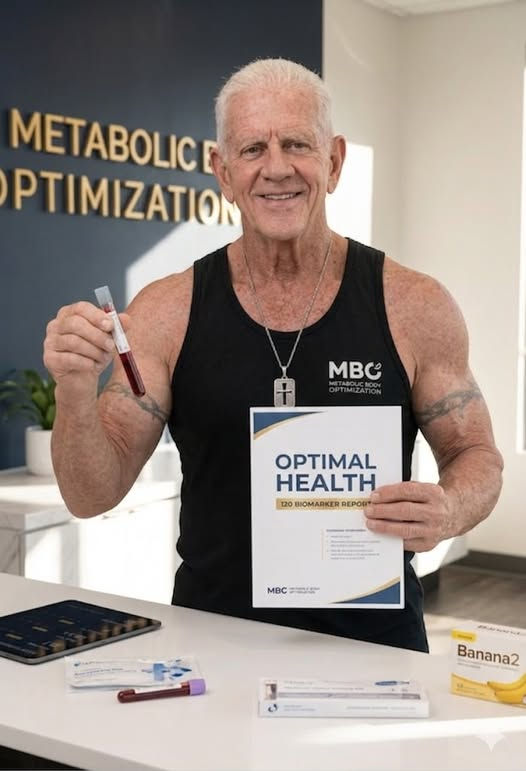
Visceral fat is linked to insulin resistance, where your cells stop responding well to insulin and blood sugar climbs. The CDC's overview of insulin resistance and diabetes explains this often develops silently for years before diagnosis. You don't feel it happening, you feel tired and assume it's age. Sometimes it's the pattern underneath. That's why I built my program around a 120-biomarker blood panel: blood chemistry provides the clues, the Omron provides the numbers, and coaching turns both into a personalized strategy. Your doctor should still be part of that conversation, always.
How to Measure Visceral Fat When the Scale Tells You Nothing
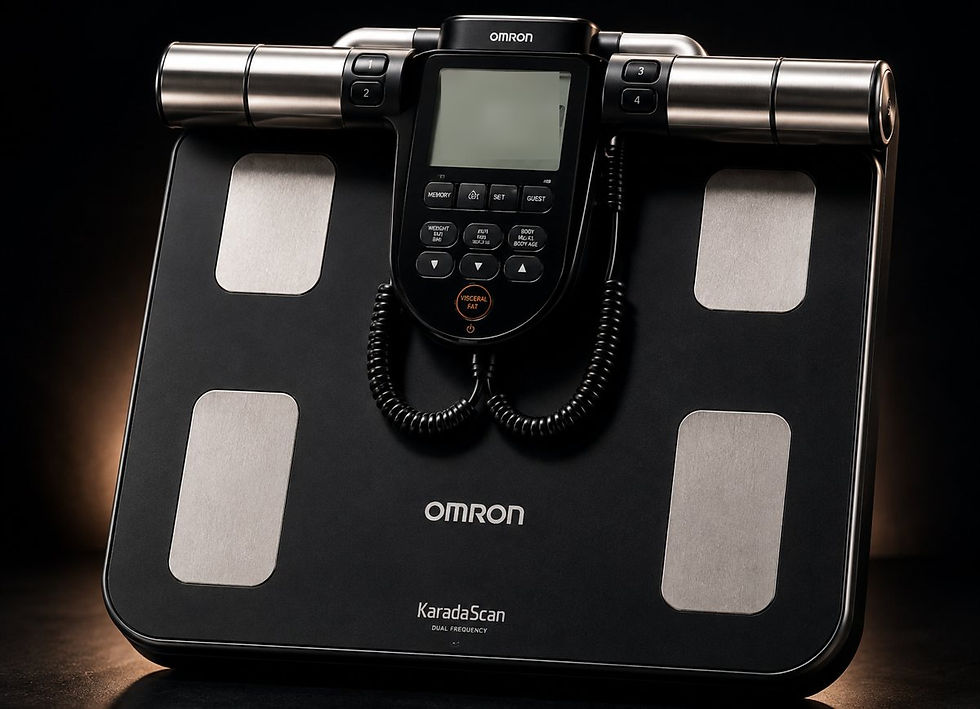
You can't measure visceral fat with a bathroom scale, a tape measure, or how your clothes fit. Every client receives their own Omron body-composition monitor to track body fat, visceral fat, muscle and metabolic age at home. We re-check at 21 days to see what kind of change actually occurred, then adjust, and nutrition, activity, hydration and behavior change start on day one.
What the scale shows | What it hides | What actually matters |
Total weight | Fat vs. muscle split | Body composition |
One number | Visceral fat level | Deep abdominal fat |
Pounds lost | Where they came from | The pattern over time |
Why Guessing Doesn't Work, and What Expert Help Actually Does
The variables involved in visceral fat are interconnected: blood markers, muscle mass, hydration, sleep, stress, history. None means much alone, the answer is rarely one isolated number, it's the pattern. That's why I don't hand out generic plans. Every client gets a personal Glyco-Cycle® plan built around everyday foods they actually like, designed to lose fat while protecting muscle, plus virtual one-on-one coaching with me anywhere in the US: no driving, no waiting rooms, steady accountability. In 35 years I've never met a client with too much muscle.
Pro Tip The clients who change fastest are the ones who change behavior on day one: alcohol to none, sedentary to active, four structured meals, structured hydration. The body responds to the change, not the calendar.
Here's what a few MBO clients have said in their Google reviews:
"I've lost 50 fat lbs and gained 10 lbs of muscle." Tracey B.
"In 12 weeks I reduced my body age to 52 years, and lost 40 lbs of body fat." Edward M.
"I finally found success at losing post-menopause weight. I didn't get hungry and the program has become my lifestyle." Mandy A.
Individual results vary.
If this sounds like the hidden variable you've been missing, let's find out what's actually happening in your body. Book a complimentary consultation: https://oncehub.com/mbo-clinic, or call or text my assistant Iris: (772) 946-1328.
What Every MBO Client Receives
Reading about visceral fat won't change it. Measuring it, understanding it and having someone in your corner will. Here's what every MBO client receives:
Your own Omron body-composition monitor: track body fat, visceral fat, muscle and metabolic age at home, so you always know what's really changing.
A 120-biomarker blood panel: your plan is built on your body's own clues, not guesswork.
A personal Glyco-Cycle® plan: built around everyday foods you already like, designed to lose fat while protecting muscle.
Virtual one-on-one coaching with me: anywhere in the US. No driving, no waiting rooms, and steady accountability every step of the way.

About Coach Remington
Coach Charles Remington has coached fat loss for 35 years and is the creator of the Glyco-Cycle® system. Known to thousands of former clients as The Fat Loss Coach, he founded MBO Clinic (Metabolic Body Optimization) to combine body-composition testing, 120-biomarker blood panels and personal coaching. At 71, he still lives what he teaches. His message hasn't changed in 35 years: lose the fat, protect the muscle.
Ready to find out what your body is hiding? Book a complimentary consultation: https://oncehub.com/mbo-clinic, or call or text my assistant Iris: (772) 946-1328.
Frequently Asked Questions
Can you have high visceral fat with a normal BMI?
Yes, and I see it often. The scale and BMI only tell you total weight, not where that weight sits. Someone can look fine in clothes and still carry dangerous visceral fat around the organs. That is why I never trust a single number. In 35 years I've never met a client with too much muscle, but I've met plenty who were normal on the scale and surprised by their body-composition readout. Measuring visceral fat directly is the only way to know what is really happening.
How is visceral fat different from subcutaneous fat?
Subcutaneous fat sits just under the skin. You can pinch it, see it, and feel it. Visceral fat lives deeper, wrapped around your organs, and you cannot see or feel it. That is what makes it the quiet one. Both matter, but visceral fat is linked to heart and blood sugar problems in ways subcutaneous fat is not. The distinction is why a mirror and a scale can both look okay while something more important is happening underneath.
Does visceral fat increase the risk of type 2 diabetes?
It is strongly associated with it. Visceral fat around the organs interferes with how your body handles blood sugar, and that is one reason it shows up in the same conversation as type 2 diabetes. I am not your doctor and I do not diagnose, so talk with yours about your own numbers. What I can tell you is that the blood chemistry clues and a body-composition readout together tell a far clearer story than the scale alone ever will.
If you've been doing everything "right" and the scale won't budge, the problem may be hiding where you can't see it. Talk with your doctor about your risks, then let me help you read your own body's clues. Book a complimentary consultation at https://oncehub.com/mbo-clinic, or call or text my assistant Iris at (772) 946-1328.
Book Free Consultation

Comments